
10 things South Korea does better than Belgium
After two months living in Seoul and coming back to Brussels, ten specific things Korea does meaningfully better. Plus the honest list of what Belgium still wins on.
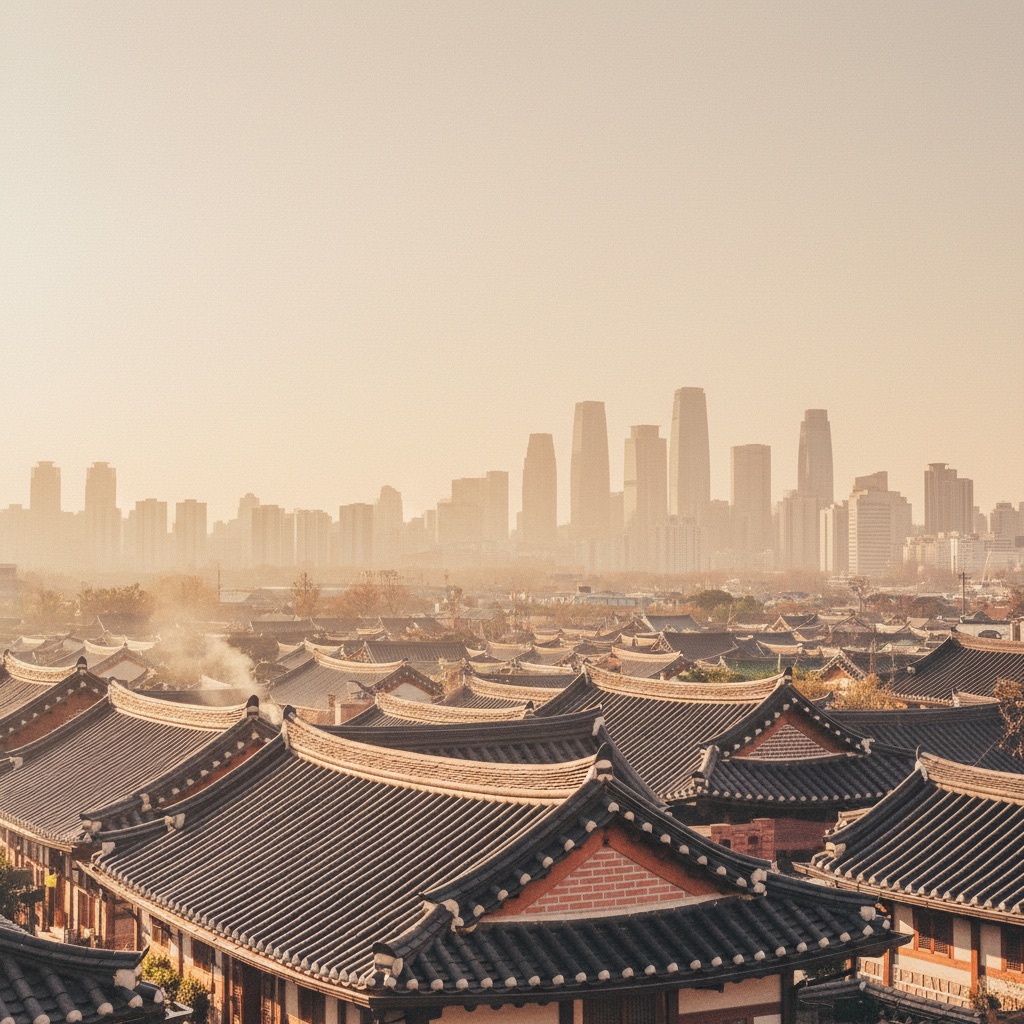
I came back to Brussels in November after two months in Seoul.
The first week back was the small calibration shock everyone who’s lived abroad knows. The little things you stopped noticing in the host city suddenly feel loud or absent at home.
Some of those things were unfair to Brussels - I was tired and missing my new routine.
Some were genuinely things Korea does better.
This is the honest list, written four months later from Brussels with the shock long settled.
Quick version
The ten things, in rough order of daily-life impact:
- Late-evening civic infrastructure
- Safety as a woman walking home at night
- Public cleanliness
- Public transport frequency and coverage
- Mobile-first digital government (for residents)
- Restaurant pricing for the quality
- Healthcare access speed
- The cafe-as-office norm
- Convenience-store food infrastructure
- Customer service consistency
1. Late-evening civic infrastructure
The biggest difference. The one that matters most for anyone working non-standard hours.
Seoul stays awake. Brussels doesn’t.
By 9pm in Seoul: cafés open, restaurants serving, public transport running, konbini lit on every corner, late-night cafés for late-night workers. By 9pm in Brussels: most restaurants stopping seating, cafés closed, the metro winding down, the street emptying out.
I wrote about this in detail in the Seoul work-life balance post. It’s the policy choice that most clearly changes daily life for freelancers, parents on irregular shifts, healthcare workers, and anyone whose hours don’t fit the 9-to-5.
2. Safety as a woman walking home at night
The change in my body language between Seoul and Brussels after dark is the second most striking thing on this list.
In Seoul, walking home at 1am or 2am from a 24-hour study cafe was unremarkable.
In Brussels, the same walk is something I pre-calibrate for - which route, who’s behind me, headphones off. Brussels isn’t dangerous by global standards. It just feels uneven after dark in a way Seoul doesn’t.
The deeper read isn’t actually about crime statistics. It’s about the structural choices that produce people on the street all night: open commerce, mixed-use blocks, lit alleys, residential density. Brussels makes the opposite choices in too many places.
3. Public cleanliness
Streets, metro stations, public toilets at the konbini, the air.
Not surgically clean. Just consistently maintained, with a quiet civic assumption that public space belongs to everyone and is everyone’s job to maintain.
(I wrote about why the konbini network handles the “no public bins” problem so well here.)
4. Public transport frequency and coverage
The Seoul metro runs every two to four minutes during the day. English signage and announcements on every train. Covers a metropolitan area the size of half of Belgium.
The STIB metro and SNCB in Brussels run irregularly. Confusing signage. Missed connections. An unspoken assumption that delays are normal.
The exception that prompts a separate article: the T-money card is less foreigner-friendly than Japan’s Suica. More on that here. Korea wins on coverage and frequency. Japan wins on payment UX.
5. Mobile-first digital government (for residents)
Korean residents file taxes via a phone app that pre-fills almost everything. They renew passports, register marriages, vote, pay fines, and get a doctor’s prescription in their phone.
Belgium has Itsme, which is structurally similar in ambition but has been adopted by a fraction of government services. The integration is fragmented across six governments. The result: a Belgian taxpayer still juggles Tax-on-Web, the commune in person, bpost, the bank, and an inconsistent set of mobile apps for things a Korean does in fifteen minutes on a phone.
(Wrote about this in detail here.)
6. Restaurant pricing for the quality
A proper Korean lunch - bibimbap, kimchi, three to five small side dishes - is ₩8,000 to ₩12,000 (€5.50 to €8).
The same money in Brussels buys a sandwich and a coffee. Or a sad pasta from a chain.
The price-to-quality ratio for everyday eating is dramatically in Korea’s favour.
Not exclusive to Seoul. Not just a “cheap labour” story either - Korean wages have caught up significantly. The structural difference is the volume of mid-quality restaurants, the supply chain density, and the cultural norm that eating well is daily, not special.
7. Healthcare access speed
I had to see a doctor in Seoul for a stubborn cough. I walked into a small clinic at 11am without an appointment, saw the doctor by 11:20, left with a prescription at 11:35, picked up medication at the pharmacy next door, and was back home by noon.
Cash up front (€60), reimbursed by my Belgian travel insurance.
The Belgian equivalent for an unscheduled GP visit is, depending on your commune, two to seven days of waiting.
The Korean system has its own problems (especially for foreigners on longer stays). But the speed-to-first-consultation is in a different league.
8. The cafe-as-office norm
Working from a Seoul cafe is the assumed mode of remote work for Korean freelancers. Every cafe has plugs at most tables, fast wifi, an unspoken tolerance for sitting four hours with one Americano, and background noise low enough to take a call.
Brussels cafes are inconsistent. Some are excellent. Some glare at laptops. Most have wifi that breaks every twenty minutes.
For a freelancer this is daily-quality-of-life real. Not something that shows up in a city ranking, but it changes what your week feels like.
9. Convenience-store food infrastructure
I wrote a full article about why Japanese and Korean konbini are dramatically better than European Carrefour Express.
Short version: fresh food delivered three times a day, social eat-in space (Korea more than Japan), genuinely 24/7, infrastructure-grade reliability.
For a freelancer ending work at 3am, the Korean konbini one minute from the hotel serving freshly-warmed bibimbap is the kind of life-quality difference Brussels doesn’t have a counter for.
10. Customer service consistency
From the small bakery to the metro staff to the cafe barista to the dry cleaner, the baseline of professional politeness in Korean service interactions is meaningfully higher than Brussels’s.
There are bad days everywhere. The median is just calibrated differently.
Partly cultural. Partly structural - Korean service work has more in-store training than European equivalents.
Belgium isn’t rude. It’s just inconsistent. The variance is what makes the daily experience feel uneven.
And the counter-list: what Belgium does better
None of this means Belgium is the loser. The honest counter-list:
- Annual leave that’s actually taken. Belgian employees use their full 20-25 days. Koreans leave significant leave unused.
- Parental leave. One of the more generous structures in Europe. Korea has improved but the social cost is still high.
- Job security and dismissal protections. Belgian protections are real. Korean private-sector employment is more fragile.
- Wage compression. A Belgian senior manager doesn’t earn twenty times a skilled worker. Korean chaebol salaries vs SME salaries do.
- Education without hagwon. Belgian school days end at 4pm and kids play outside. Korean teenagers do 12 hours of school + cram school.
- Privacy as design. GDPR is paperwork-heavy but represents a genuinely different bet about citizen data.
- Multilingual competence. The average Brussels resident speaks two to three languages. The average Seoul resident, one.
- Restaurant variety beyond Korean food. Belgium handles French, Italian, Vietnamese, Lebanese, Ethiopian at quality. Seoul’s non-Korean food scene is shallower and more expensive.
- Housing affordability for families. Brussels rent is real, but the multi-decade jeonse deposits and Seoul housing pressure are structurally worse.
- Smaller-city access. Belgium’s intercity trains get you to Antwerp, Ghent, Bruges in under an hour. Korea is more Seoul-centric.
Practical thoughts
- If you’re choosing where to live as a remote-work freelancer with no kids: Seoul wins for daily quality of life if you can afford it.
- If you’re choosing where to raise children: Belgium wins, comfortably. The hagwon and housing pressure in Korea make a real difference to family life.
- If you’re an employee who values protections: Belgium. The structural backstops matter.
- If you’re an employee who values daily energy: Seoul. The trade-offs go the other way.
FAQ
Are you saying Korea is “better” than Belgium?
No. I’m saying ten specific things are better. Other things aren’t. The honest version of country comparison is always a list of trade-offs, not a verdict.
Would you move to Seoul permanently?
Not at this stage of my life. The housing pressure, the language gap, the hagwon-as-school-system for any future kids - all real reasons to stay in Brussels. The two months were genuinely better than the equivalent two months in Brussels would have been. Permanent is a different question.
What would make Brussels more Seoul-like?
Late-night infrastructure is the cheapest fix. Open commerce later, light the streets properly, run public transport later. None of these require Belgium to become Korean. They require Brussels to make different policy choices.
Closing thoughts
Lists like this risk feeling smug in either direction. I’m not selling Seoul as paradise - the daily-life advantage I’m describing comes with structural costs (hagwon, overwork, housing) most Europeans wouldn’t accept.
I’m also not pretending Brussels is fine. The late-evening dead zones, the inconsistent service, the cafe-laptop hostility, are real and fixable.
The more useful framing: cities make policy choices about whose convenience the system optimises for, and those choices show up in daily life.
Seoul has, for whatever combination of reasons, made many of the small choices in favour of people working late, walking home alone, finding food at midnight, taking a bus home.
Brussels has made the opposite choices in too many places.
Both countries can learn from each other.