
Unwritten rules in South Korea: what I noticed living in Seoul
After two months living in Seoul, I started noticing small social rules I hadn't paid attention to during shorter trips. Once I saw the idea behind them - respect - they stopped feeling random.
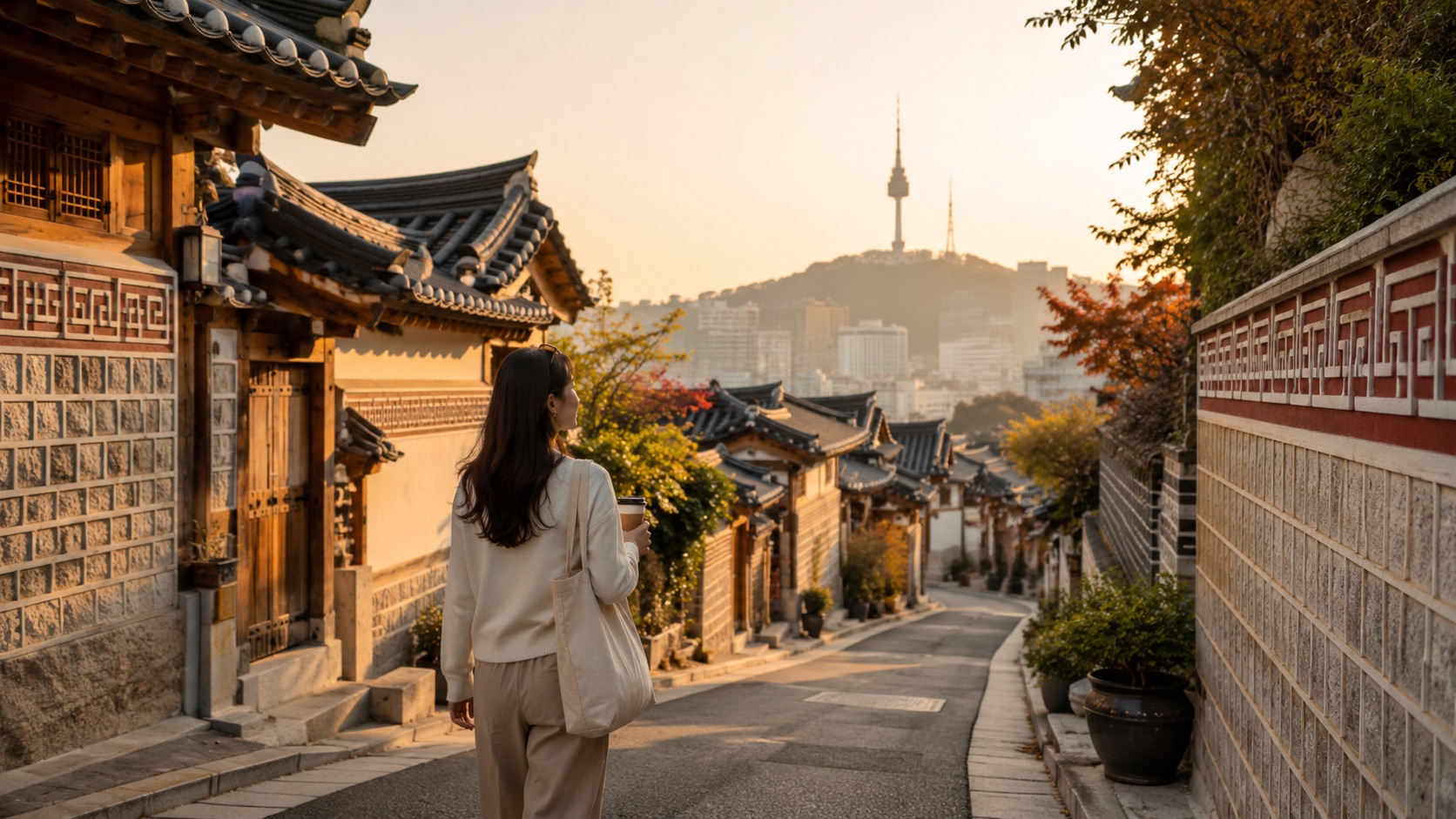
After two months living in Seoul, I started noticing small social rules I hadn't really paid attention to during shorter trips.
At first, some of them felt a bit random.
Why do people ask your age so quickly? Why does it matter who drinks first? Why are there so many small rules around food?
But after a while, I started seeing the same idea behind many of them: respect.
Respect for age. Respect for the group. Respect for the food. Respect for the moment you're sharing with others.
Once I understood it that way, most of the small rules stopped feeling intimidating. They started to make more sense.
And honestly, Koreans are usually quite forgiving with foreigners who try. So this is not meant to be dramatic or scary. You don't need to be perfect.
But knowing a few things before going can make daily life much easier.
Quick version
If I had to summarize it simply:
- Age matters, but not in a rude way.
- The group often matters more than the individual.
- Food has its own rhythm.
- Drinking has more rules than I expected.
- Public spaces are usually quiet and respectful.
- A small "annyeonghaseyo" or "kamsahamnida" really does help.
Most of the time, the best thing you can do is observe what locals are doing and follow along.
The age question - and why it isn't just curiosity
One thing that surprised me at first is how quickly Koreans can ask your age.
In Belgium, this would feel quite direct. Maybe even a little uncomfortable, depending on the context.
But in Korea, it doesn't really have the same meaning.
Age helps people understand how to speak to you. Korean is not like English or French, where you can basically use the same structure with everyone. The way you speak can change depending on whether the person is older, younger, close to you, or more formal.
So when someone asks your age, it's not always because they're being nosy. It's more like they're trying to understand the relationship between you.
The easiest answer is usually to give your year of birth and ask theirs back.
At first, I found it strange. But after a while, I actually understood why it helps. It makes the interaction clearer.
Korean meals have their own rhythm
At first, Korean meals can feel like there are many small rules.
But after seeing it a few times, I realized there is actually a rhythm to it.
You don't need to overthink everything, but there are a few things that are good to know.
Usually, the eldest or most senior person starts eating first. So if you're eating with Korean people, it's better to wait a little before picking up your spoon or chopsticks.
Banchan, the small side dishes, are shared. They usually come with the meal, can often be refilled, and are not something you order separately. I loved this part of Korean food culture, but it also made me more aware that food should not be wasted.
Another thing that surprised me: you don't lift your rice bowl.
In Japan, I was used to seeing people bring the bowl closer. In Korea, the bowl stays on the table, and you bring the spoon to your mouth.
It's a small detail, but it's exactly the kind of thing you only notice once you're there.
A few other things I learned:
- Rice is usually eaten with a spoon.
- Chopsticks are used for side dishes and shared food.
- Many meals are made to be shared.
- At Korean BBQ, someone usually takes care of the grill.
- Blowing your nose at the table is not really done, so it's better to step away.
None of this is complicated, but it helps to pay attention.
Drinking etiquette surprised me more than food
I knew soju was important in Korea, but I didn't expect drinking to have so many small rules.
The main one: you usually don't pour your own drink. Someone else pours for you, and you pour for them.
If someone older pours you a drink, it's polite to receive it with two hands. When drinking in front of an older person, people often turn their head slightly away before taking a sip.
It can feel very formal the first time, but once you understand the logic, it becomes quite natural.
It's not just about alcohol. It's about showing respect and being part of the group.
I would still add a small nuance here: you don't have to drink if you really don't want to. But from what I noticed, accepting the first round, even symbolically, can be seen as joining in.
You can take a small sip, put the glass down, and then decline later if needed.
That felt like a good balance to me.
Public transport and small daily habits
Public transport in Seoul is very easy to use, but there are also a few small habits to notice.
Priority seats are really respected. Even when they are empty, I usually avoided sitting there. The pink seats are for pregnant women, and other priority seats are for elderly people, people with disabilities, or people with young children.
Another thing I noticed is that Seoul is quieter than I expected in public transport, but not as silent as Japan.
Short phone calls are more accepted than in Japan, but people still keep things quite calm. It's not the place for loud conversations.
A few small things also matter:
- Stand on the right side of escalators.
- Keep your backpack in front of you when the train is crowded.
- Don't block the doors.
- Don't eat strong-smelling food on the metro.
- Try not to take too much space.
It sounds small, but these details make public transport feel smoother.
Small rules I hadn't really read about before
There are a few things I noticed only after spending more time in Seoul.
For example, pointing with one finger can feel a bit rude. It's better to use an open hand, palm up.
Writing someone's name in red is also something to avoid. In Korea, red ink can be linked to death or funeral records, so it can make people uncomfortable.
Using two hands when giving or receiving something is also very common, especially with older people. It can be a business card, a gift, money, or even something small in a shop.
And of course, shoes come off in homes and some traditional places. In modern cafés or restaurants, it's usually normal to keep them on, but if you see shoes near the entrance, that's your sign.
I don't think tourists need to know everything perfectly. But noticing these small things shows that you care.
Three words that helped me
You don't need to speak Korean fluently to visit South Korea.
But knowing a few polite words really helps.
The three I used all the time were:
- Annyeonghaseyo - hello
- Kamsahamnida - thank you
- Juseyo - please / I'd like
Even if the pronunciation is not perfect, people usually appreciate the effort.
And if you have a bit of time before your trip, I really recommend learning Hangul.
The alphabet is easier than it looks, and being able to read signs, station names, menus, or café names changes how the country feels.
You may not understand everything, but at least it doesn't feel completely closed anymore.
The noraebang experience
At some point, I ended up in a noraebang, a Korean karaoke room, with people I had met.
I'm not someone who naturally wants to sing in front of people, so I was a bit unsure at first.
But from what I experienced, noraebang is not really about singing well. It's more about joining the group.
You don't need to perform. You just need to participate a little.
A few things I noticed:
- Pick a song people can enjoy with you.
- Don't take the mic for too long.
- Pass it around.
- If someone else is singing, encourage them.
- The tambourine is there for a reason.
I had more fun than I expected.
And honestly, once everyone starts singing, it feels much less embarrassing.
What surprised me most
Two things surprised me.
The first one is that Korea felt warmer than I expected.
Not necessarily immediately. At first, it can feel direct, a bit fast, and sometimes confusing. But after a meal, a drink, or a shared activity, things can become warmer quite quickly.
It felt different from Japan, where people were extremely polite, but sometimes harder to get close to as a foreigner.
Korea felt a bit more direct, but also more open once the first step was made.
The second thing is that the age system actually made some conversations easier for me.
Before going, I thought I would find it intrusive. In Europe, we usually avoid these kinds of questions.
But after a while, I understood that it can remove some ambiguity. Once people know where they stand, the interaction becomes clearer.
I don't think I would want to live with that system everywhere, all the time.
But in Korea, I understood why it exists.
Practical thoughts for tourists
If you're visiting South Korea, I wouldn't stress too much about all the rules.
You will probably make small mistakes. That's normal.
The most important things, for me, are:
- Learn a few polite words.
- Read Hangul if you can.
- If someone asks your age, don't take it personally.
- At the table, wait a little before eating.
- Don't lift your rice bowl.
- Share food respectfully.
- Use two hands with older people.
- Be quiet in public transport.
- Avoid priority seats.
- If you're unsure, observe what locals do.
And if you make a mistake, just smile, say sorry, and move on.
Most people won't expect you to know everything.
But they will notice if you try.
FAQ
Will I offend someone if I make a mistake in Korea?
Probably not. From what I experienced, Koreans are quite forgiving with foreigners who clearly try. You don't need to know every rule perfectly. Just be polite, pay attention, and avoid being loud or disrespectful in public.
Do I need to speak Korean before visiting South Korea?
No, but learning a few polite words really helps. Even a simple "annyeonghaseyo" or "kamsahamnida" can make interactions feel warmer. If you have time, learning Hangul is also worth it because it makes signs, menus and stations feel less intimidating.
What is the most important rule to remember in South Korea?
For me, the main idea is respect. Respect older people, respect the group, and respect the moment you're sharing with others, especially around meals and drinks. Once you understand that, most small rules feel less random.
Closing thoughts
From the outside, it can look like there are a lot of rules in South Korea.
And to be fair, there are many small things to notice.
But once you're there, most of them start to make sense.
You don't need to be perfect. You don't need to know every detail. You just need to pay attention, try a little, and show respect.
For me, that's what made these unwritten rules feel less like rules, and more like a way of understanding how people connect with each other.