
Why Tokyo feels safer than Brussels
Walking back to my apartment in Minato at midnight, my shoulders relaxed in a way I hadn't felt in years. Here's what I noticed about Tokyo safety - and what Brussels could borrow.
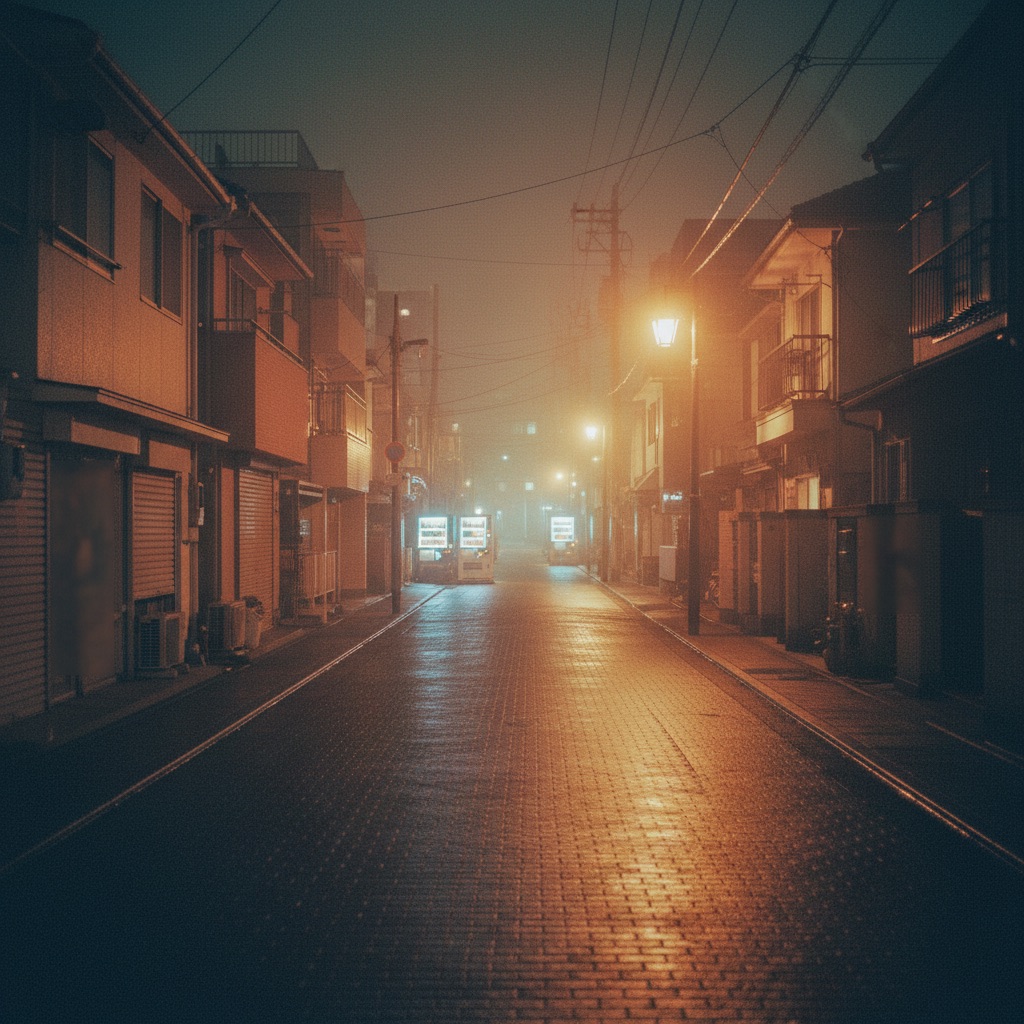
Tokyo doesn’t look safer than Brussels.
It looks bigger, louder, more crowded. Fourteen million people in the prefecture, around 37 million in the wider metro area. Neon. Vending machines glowing on residential corners. Last trains packed shoulder-to-shoulder at 11:50pm.
And yet, the first time I took that last train back to my apartment in Minato and walked home through a sleeping side street at midnight, my body did something I hadn’t felt in years.
It relaxed.
Coming from Brussels, that was the real surprise. Not the speed. Not the food. Not the politeness. The fact that I could walk anywhere, any time, and my shoulders just let go.
Brussels isn’t a dangerous city by any honest measure. But there are streets in Etterbeek and around Gare du Midi where I scan the sidewalk after 10pm, take my hand out of my pocket, listen behind me.
In Tokyo I never once did.
Quick version
- The crime numbers really are lower. Tokyo’s homicide rate sits well below 0.5 per 100,000 people. Brussels-Capital Region sits closer to 3-3.5.
- But the feeling is mostly about urban design and density. Tokyo streets are rarely empty.
- And a thin cultural layer. Drunk people don’t escalate. Lost wallets get returned.
- Brussels isn’t actually dangerous. It just feels uneven in a way Tokyo doesn’t.
What the numbers say
Tokyo’s homicide rate is one of the lowest in the OECD - roughly 0.2 to 0.4 per 100,000 residents, against a Japan national rate of about 0.23 per 100,000 (World Bank, 2023).
Brussels-Capital Region sits closer to 3-3.5 per 100,000 in recent Eurostat data (2023-2024), in line with - though slightly above - most large European capitals.
Per person, Brussels has roughly ten times more homicides than Tokyo on the most recently published rates.
Violent assault, robbery and theft show the same direction.
Two honest caveats. First, Japan has well-documented under-reporting of sexual harassment, especially groping (chikan) on packed trains. The number you see in the official stats is lower than the reality. Second, Brussels numbers aren’t catastrophic by world standards.
The point isn’t “Brussels is dangerous.” It’s that the gap between the two cities is wider than most Europeans assume, and the gap in feeling is wider still.
Why it feels different on foot
If the numbers explained everything, every city with a low crime rate would feel like Tokyo. They don’t. Geneva is statistically safer than most of Tokyo but doesn’t feel as alive at midnight. Helsinki has lower crime than central Tokyo but empties out after 9pm.
The Tokyo difference, walking around, is constant low-level human presence.
- A 7-Eleven on a residential corner is open 24 hours, lit like a small lighthouse.
- A vending machine hums on a sleeping street, casting cold light onto the asphalt.
- A salaryman is buying onigiri at 1am because he just got off the last train.
- A woman walks her dog at 11:30pm in slippers and a long cardigan, completely unbothered.
- A kid in school uniform - a kid, alone - gets off at the next station and walks home from cram school.
The children-alone-at-night part is the one that breaks European brains. I watched a girl who couldn’t have been older than ten step off a JR Yamanote train at 9:15pm, swipe her IC card at the gate, and walk into a dark side street like she had done it three hundred times.
Because she had.
It’s the “eyes on the street” effect Jane Jacobs wrote about for New York in 1961. Tokyo is the city that took it most seriously. An empty street is rare. And because it’s rare, it doesn’t feel threatening when it happens - your brain doesn’t have to ask “where did everyone go?”
Brussels has the opposite pattern in too many places. Streets that are alive at 6pm hard-empty by 9. Avenue Louise after the shops close. Certain stretches around Botanique. The long block south of Gare du Nord. These aren’t statistically dangerous. They’re statistically empty.
And for a pedestrian, emptiness reads almost exactly like danger.
Design choices that quietly do the work
What’s producing all that nighttime presence isn’t magic. It’s a set of design choices Tokyo has made consistently for fifty years.
- Mixed-use blocks at street level. Almost every Tokyo street has shops or restaurants on the ground floor with apartments above. Commerce, light and people are baked into residential life.
- Tiny streets, slow cars. Most residential roads have no sidewalk, no marked lanes, and effective speed limits around 30 km/h. Pedestrians own the street. Cars are guests.
- Train stations integrated into commercial fabric. When you exit Shibuya or Ikebukuro or a small suburban station, you walk out into something alive. You don’t get deposited into a windswept plaza.
- Lighting that’s warm and even. Streetlights aren’t only at intersections. Alleys are still lit. The light is sodium-warm, not the cold blue European cities use.
- The koban network. Small police boxes - over a thousand of them across Tokyo Metropolis, densely concentrated in central wards. Not enforcement-heavy. They’re presence.
None of this requires Japanese culture to work. It requires Japanese zoning, street design and lighting policy.
The cultural layer
Some of what makes Tokyo feel calm at night isn’t infrastructure. It’s the social agreement Japanese people have made about how to behave in public.
Drunk people in Tokyo are sleepy, loud, occasionally puking - but very rarely aggressive. Drunk confrontation is socially humiliating, and the koban is around the corner anyway.
Compare to a Friday night in central Brussels: drinking culture runs hotter, escalates faster, confrontation has lower social cost.
Public space is treated as shared. People queue. People wait. People apologise when they bump into you. A woman leaves her bag on a café chair to reserve it while she goes to the toilet.
This part doesn’t transplant. You can’t legislate “everyone be quietly considerate of strangers.” It’s the residue of a thousand years of social pressure that Europe - for very good historical reasons - never built.
Trying to replicate it would be impossible and a bit dystopian. Japan’s hyper-conformity is the same thing that makes it hard to leave a job or stand out at school.
So the cultural layer is the part to observe carefully and not try to copy. The architectural and policy layer is the part worth borrowing.
What surprised me most
Three things, none of which I expected.
The quietness. Tokyo is loud in places - Shibuya crossing, Akihabara, anywhere with a pachinko parlor - but the default sonic background of a residential street is almost contemplative. No car horns. No revving engines. No shouting drunks.
The children. Eight-year-olds on trains with a school bag and a small bottle of milk. Six-year-olds walking home from school in groups.
The recalibration back home. The day I flew back to Brussels, I noticed something I hadn’t felt in three weeks: a small tension in my chest at Gare du Midi when I exited the train. Not because Brussels did anything wrong. But because my body had spent three weeks learning what a low-baseline-anxiety city feels like, and now had to retighten.
Practical thoughts
- If you’re a first-time visitor: don’t worry about safety, even at night, even as a woman, even alone. Last train + walk home in a residential area is routine.
- Real precautions: pickpockets in Shibuya, Shinjuku and Tsukiji on busy days. Drunk hassle near Roppongi on weekends. Chikan on rush-hour Yamanote trains - most lines have women-only carriages during commute hours.
- Don’t compare Tokyo to your home country. Compare to your own neighborhood at the same time of night.
- If you live in a European city: notice which streets feel uneven after 9pm. Usually it’s open commerce and consistent lighting that’s missing, not policing.
FAQ
Is Tokyo safe at night for women travelling alone?
Yes, and more so than most European capitals. Walking home alone at 1am from the last train is normal and not considered risky. Use the women-only carriage during rush hour to avoid groping - the one underreported risk worth taking seriously.
Is Tokyo’s crime rate really that low?
Yes for homicide, assault and theft - those numbers are well-audited. No for sexual harassment, which is significantly underreported. Treat the official numbers as a reliable floor.
What about scams?
Almost none. Tourist menus don’t really exist. Taxis use meters. ATM rates are honest. The one persistent scam: touts near Roppongi promising cheap drinks. Ignore them.
Closing thoughts
The body knows when a city respects it. Three weeks in Tokyo is enough to feel the difference. The first hour back in Brussels is enough to feel it leave.
Brussels is not Tokyo and shouldn’t try to be. But the choices - where shops stay open late, how streets are lit, where train stations deposit you, whether residential blocks have ground-floor commerce - that we make differently here for no particular reason. None of them require us to become Japanese. All of them would quietly make a Brussels evening walk feel a little more like a Tokyo one.