
Seoul work-life balance: what I noticed as a Brussels freelancer working US hours
Working from Seoul on Brussels mornings and US evenings, ending most days at 3am. Here's what late-night Seoul does for freelancers that Brussels doesn't.
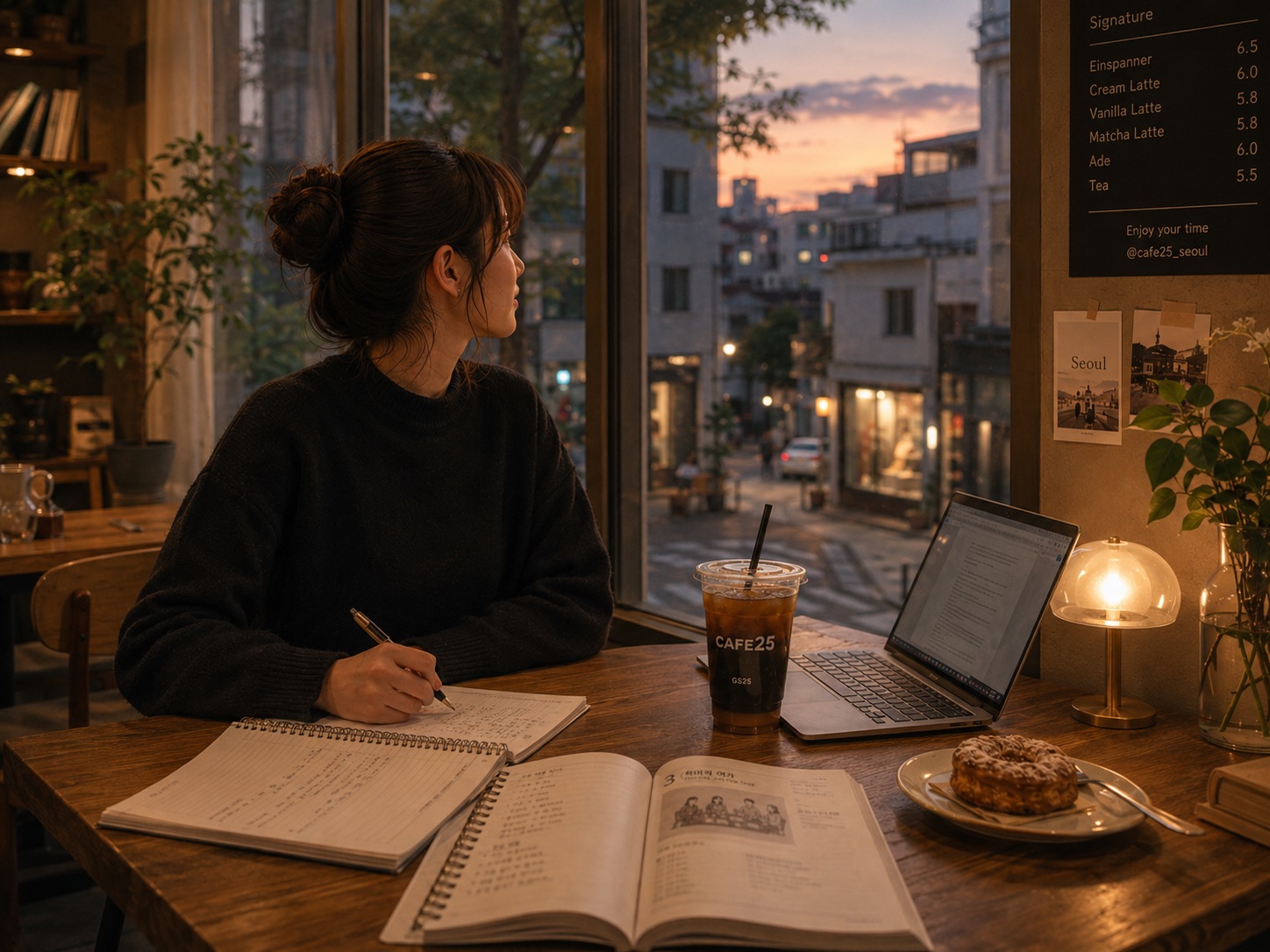
I’m a freelancer based in Brussels.
I work with European clients in the morning and American clients in the evening. Most of my workdays end somewhere between 2 and 4am.
Freelancing gives me schedule freedom in theory. In practice I can’t take time off without losing income, and the late evenings are non-negotiable when half my pipeline is on Pacific time.
I spent two months working from Seoul on that schedule.
And it changed how I think about work-life balance. Not because Korea has it figured out (it doesn’t), but because Seoul has the late-night infrastructure Brussels doesn’t.
For someone whose workday ends after midnight, that’s a big difference.
Quick version
- Korea works long hours. Legal cap is 52 hours per week. Belgium effectively caps at 40.
- But Korean cities support tired people. Brussels closes early. Seoul doesn’t.
- For freelancers on long or odd hours, Seoul wins on food, transport, lighting, safety.
- What Belgium still gets right: annual leave, parental leave, job security - mostly relevant if you have an employer.
The numbers
Korean workers do around 1,870 hours per year. Belgium is closer to 1,540 - one of the lowest in the OECD.
That gap is about eight extra weeks of work per year.
The legal context changed in 2018, when the weekly cap dropped from 68 hours to 52. Real progress. It also means a Korean employer could legally ask for 68 hours per week until very recently.
The Korean overwork story is concentrated in big corporates, startups, finance and hospitality. Public sector and academia look much closer to European hours.
What hweshik is, and how it’s changing
The hardest piece for an outsider to understand is hweshik - the after-work team dinner the boss often calls on short notice.
For decades, this was load-bearing. It was where bonuses got hinted at, promotions discussed, teams became teams. Refusing wasn’t just declining a meal - it was signalling you weren’t fully in.
The shift is recent.
The under-35 generation has started refusing. Cleanly. Often. The norm shifted faster than anyone expected.
You can see the split in any Seoul office today. The senior managers expect hweshik. The juniors don’t. Both sides know it’s in transition.
What Seoul does better than I expected
Yes, Seoul works long hours. But the city is also designed to support people who finish work tired.
Late-night infrastructure. A Seoulite leaving work at 9pm has dozens of options that don’t require energy. A jjimjilbang (24-hour bathhouse) to soak off the day. A street-food tent. A noraebang. A 24-hour study café. Massage chairs at the convenience store.
Weekend protection. The Saturday-Sunday boundary is observed. Corporate overtime happens during the week.
Recovery food. Korean food culture has dishes for being tired. Samgyetang for general weariness. Haejangguk for the morning after. Hot stews for cold rainy days.
Green space in the city. Han River parks, Namsan, Bukhansan all inside city limits. The “I worked late, I’ll sit by water for an hour” option is built in.
Public transport until midnight. Seoul metro runs until just after midnight. You can leave a hweshik at 11pm and get home for a few euros.
When your workday ends at 3am
The Korea-Belgium work story is almost always told from the employee angle. As a freelancer, it’s different.
I have full control over when I work but no protection from how much. No paid time off - taking a week means losing a week of income. No sick day. No parental leave structure.
Working from Brussels on European mornings and American evenings, my weekday reliably ends between 2 and 4am.
Three pieces of Seoul’s infrastructure made this much more livable than the same workday in Brussels.
A 7-Eleven at 3am with actual hot food
Finishing a client call at 02:45 and walking ten minutes to a CU or GS25 still serving freshly-warmed bibimbap, gimbap, ramyeon and a hot Americano.
In Brussels at 3am my food options are: leftover pasta, an Uber Eats minimum from somewhere still open, or cooking from scratch with the energy of someone who just did twelve hours of meetings.
In Seoul at 3am I had cheap good food within walking distance. Every single night.
It sounds small. For someone whose evenings are when she actually lives, it’s huge.
A city that’s still alive when you finish
When my workday ends in Brussels the city has been asleep for hours.
Public transport stopped just after midnight. Most cafés closed at 6pm. The street is empty.
In Seoul, ending at 3am means walking out into a city that’s still gently humming. Bus stops with real-time departures. Late-night cafés (I worked from a 24-hour study café twice when my hotel wifi died). A corner store every two blocks. Lit streets.
I could go for a walk and feel part of a city, not locked out of one.
Walking home at 3am as a woman, alone, fine
This is the piece that genuinely shifted how I think.
In Brussels, “can I walk home at this hour” is something I’ve already calibrated into my evenings. I take less risky routes. I notice who’s behind me. I don’t linger.
In Seoul that calibration just turned off.
By the third night I stopped thinking about it. Walking back to my hotel in Gangnam-Seocho at 3am was as unremarkable as walking to the corner store in the afternoon.
Coming back to Brussels, I noticed my body re-tighten the moment I left Gare du Midi.
It’s a real tax on your evening life. I didn’t realise how much I’d been paying until I’d lived without it.
And underneath all of it: clean
Streets, metro stations, public toilets at the konbini, the air.
Not surgically clean. Just consistently maintained.
After two months, walking down Avenue Louise the first day back was a small visual shock. I’d stopped noticing how noisy Brussels looks - until I’d not seen it for a while.
What Korea does worse - and Belgium gets right
The employee story matters too.
Annual leave. Belgian workers get 20-25 days plus public holidays. Korean workers get 15. The bigger gap is in actually using them. Belgian workers take their full leave with no social cost. Korean workers leave a meaningful share unused.
Parental leave. Belgium’s parental leave is one of the more generous in Europe. Korean leave is similar on paper, but in practice - especially for men - taking it is socially fraught. The 0.72 birth rate is structural exhaustion European countries don’t face at the same level.
Job security. Belgian protections are real. Korean private-sector security is more fragile.
The hagwon problem. Korean children, from elementary on, attend cram schools (hagwon) until 10pm. A Korean teenager’s weekday is 7am to 10pm. Belgian school ends at 4pm and kids play outside.
Housing. Seoul rent is real, but the bigger issue is the jeonse deposit - 50-70% of a flat’s value as a multi-year deposit. Brussels rents aren’t cheap, but they don’t compare.
What I took home to Brussels
Three small honest observations.
European work-life balance isn’t really about hours. Brussels protects the boundary around your workday. But the time AFTER work - the city you walk into when you’re done - is what makes the difference between “I have time to myself” and “I have time to myself but nowhere to be”. Brussels has the first half. Seoul has the second.
Late-night civic infrastructure is itself a quality-of-life policy. A city that keeps shops open, lights its streets, and makes walking home at midnight feel normal gives back hours to people on non-standard schedules.
Safety after dark is a freelancer issue. After Seoul I noticed that some of the things eating my time in Brussels aren’t about the work - they’re about the city.
Practical thoughts
- If you’re a freelancer with long or odd hours and considering Seoul for a month: do it. The infrastructure helps.
- Visa note: Korea’s 2024 “Workation” visa requires a foreign employer and excludes sole-proprietor freelancers. Most freelancers stay on the 90-day visa-free entry available to EU passports.
- If you live in Brussels and work non-standard hours: notice what’s missing after 10pm. Most of it is policy, not nature.
FAQ
Is Seoul a good city for a freelancer to work from?
Yes, especially if your hours are non-standard. The cafés, public transport, food and late-night safety make it much smoother than Brussels for the evening-into-night schedule a Brussels-EU-and-US freelancer ends up with.
Did you actually work full days from Seoul?
Yes. Full client load. Q4 in digital marketing, so a heavy season. Not a slow nomad-style holiday. I just liked the city I was working from more than the one I usually work from.
What was the hardest part of working from Seoul?
The transport card friction and the timezone shift on days a client needed me on European time. Those days the mornings were short.
Closing thoughts
The “Korea overworks, Europe rests” story is too simple.
Korea has structural overwork problems Belgium doesn’t. Belgium has structural under-restoration problems Korea has partly solved.
What Korea taught me - as someone whose workday doesn’t end at 6pm - is that “working less” is only half the equation. The other half is what your city offers when you stop working.
On that question, Seoul has been thinking about it longer than Brussels has.