
Why Japan and Korea stay so clean with no public bins
Tokyo has almost no street bins and is spotless. Korea has more bins and is still much cleaner than Brussels. Here's what I noticed - and the small reasons behind it.
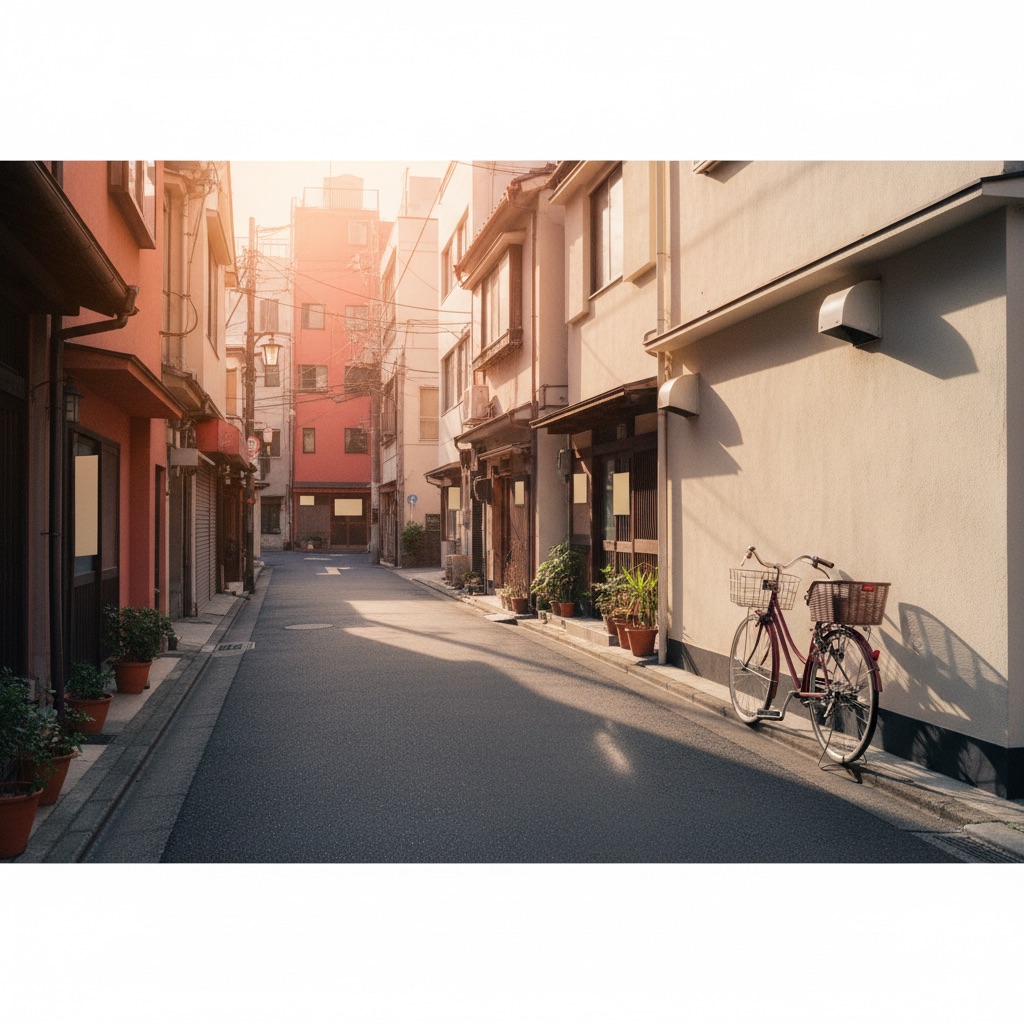
My first day in Tokyo on this trip, I finished a coffee and started looking for a bin.
Three blocks. No bin.
Three more blocks. Still no bin.
I gave up and walked around with an empty cup in my hand for an hour. The sidewalk under my feet was spotless.
That contrast - fewer bins, cleaner streets - is one of the small things that surprised me most about both Japan and Korea.
Quick version
- Tokyo has dramatically fewer street bins than Brussels. The streets are dramatically cleaner.
- Most Tokyo bins were removed after the 1995 sarin attack on the subway. The cleanliness was already there. The bin removal worked because the behaviour was in place.
- Convenience stores fill the gap. Every konbini has bins by the entrance.
- Korea kept more public bins and is also much cleaner than Belgium - through a different system (paid trash bags, food-waste sorting).
1995 - the year Tokyo removed its bins
On March 20, 1995, members of the Aum Shinrikyo cult released sarin gas on five Tokyo subway lines during the morning rush hour. Thirteen people died on the day, with a fourteenth dying in 2020 from related complications. Around 5,500 to 6,300 people were injured, many severely.
One of the worst terrorist attacks in Japanese history.
Investigation into earlier Aum incidents had shown that bins in subway stations were being used to plant materials. After the sarin attack, Tokyo Metro and JR East removed almost all bins from subway stations and many from the street network around them.
The official reason was security.
The expectation was that streets would get dirtier. They didn’t. The underlying behaviour was already in place.
The behaviour that makes it work
If you took bins out of Brussels tomorrow, the city would visibly accumulate trash within a week.
The reason Tokyo doesn’t is that the underlying agreement is different.
The agreement, simplified: if you produced trash, it belongs to you until you can responsibly dispose of it. Not “until you can find a bin.” Until you can dispose of it.
What that looks like in practice:
- You buy a coffee. You drink it. You carry the empty cup for the next 90 minutes until you find a bin or get home.
- You eat a snack on a walk. You hold the wrapper. Carrying trash for 30 minutes is normal.
- You finish a drink at a vending machine. The machine has a recycling slot next to it. You drop the can there.
- You eat at a stand-up ramen counter. The bin is behind the counter. You hand them your bowl when you leave.
- You spent the day outside. You come home with a small bundle of wrappers and cans you carried all day.
The bag in a Japanese person’s bag is sometimes their entire day’s trash.
Coming from a culture that expects “find a bin” as the resolution, this looks impossible. It works because the time horizon is different. You’re not looking for a bin in the next 30 seconds. You’re looking for a responsible disposal in the next 4 hours.
The konbini fallback
The system would be cleaner-than-Brussels but visibly painful if there were no infrastructure at all. There is - it’s just embedded in retail rather than in public space.
Every konbini in Japan has bins by the front door. Separate ones for cans, bottles, paper, burnables. They’re nominally for trash from things you bought at that store. In practice, everyone uses them.
Tokyo has around 7,400 konbini. That’s a dense network of de facto public bin infrastructure, just owned by the chains rather than the city.
(I wrote about why konbini work so well here.)
Korea: more bins, also clean
Korea kept more public bins than Japan. Major Seoul subway stations have several per platform. Streets in central districts often have bins on corners.
Korea is also clean. Less surgically clean than Tokyo. But visibly cleaner than any Western European city.
Two specific Korean systems do a lot of work:
Pay-as-you-throw residential trash. Korean households pay for trash by the bag. You buy official trash bags from the convenience store - they’re the only ones the city will collect. The cost per bag is small but visible. The result: Koreans throw out a lot less than Belgians do.
Mandatory food waste sorting. Korea separates food waste into its own bins, charged by weight in many districts. South Korea’s food waste recycling rate is genuinely world-leading - around 95%.
Two paths to the same clean-city outcome.
What it looks like for a tourist
- You’ll spend the first day asking yourself where to put things. By day three you’ll have a small plastic bag in your day bag for trash.
- You’ll start ranking konbini by their bins. 7-Eleven and FamilyMart tend to have the cleanest setups.
- If you’re a smoker - this gets harder. Smoking in public is heavily restricted. Finding a designated smoking area with a bin is sometimes the only option.
- If you do something obviously wrong (drop something on the street), a passing Japanese person may, gently, point it out. Or quietly pick it up after you. Both are awkward.
What I noticed back in Brussels
Within four days of arriving in Tokyo, I had a small plastic bag inside my day bag that I’d been adding to all day. Bottle cap. Sandwich wrapper. Train ticket stub. Used tissue.
By evening it was full.
I’d dispose of it at the konbini downstairs from my place on the way in.
That single behaviour - “you carry today’s trash on you” - is the cultural lift that makes the whole system work.
After a week, it was second nature. After three weeks, I noticed I’d started doing it back in Brussels.
The other thing: the street looks different when you’re not in litter.
Brussels streets feel busy partly because they’re visually noisy - litter, leaves, dog mess, dust. Tokyo streets feel calmer because they’re visually quiet.
The first walk down Avenue Louise back home felt visually loud in a way I hadn’t realised was the baseline.
What Brussels could borrow
You can’t just remove the Brussels bins. The behaviour isn’t there yet. The city would get visibly dirtier.
But there are intermediate moves:
- Make convenience stores and supermarkets accept public trash by default. One outside bin sorted for recyclables would let the public-space side breathe.
- Adopt pay-as-you-throw household trash. Some Belgian communes already do; the Korean model is more uniform.
- Treat vending-machine recycling as default. Drink at the machine, drop the can in the slot next to it. Cheap to copy.
- Invest in food waste sorting infrastructure. Korea has shown it works.
Practical thoughts
- Carry a small foldable plastic bag in your day bag. The single most useful Japan/Korea travel item.
- If you can’t find a public bin, the answer is a konbini, a train station, or your hotel.
- Don’t litter even if “everyone is in a rush.” You’ll stand out negatively.
- If you smoke: find designated smoking areas (look for signs in major districts) and dispose of butts there.
FAQ
Are there really no bins in Tokyo?
There are bins, but few on the street. They’re at konbini, train stations, parks, vending machines and tourist sites. Central commercial streets often have none for several blocks.
What do Japanese people do with their trash all day?
Carry it. Then dispose of it at home, at a konbini, or at a station bin. The “carry it” part is the cultural lift Europeans underestimate.
Why is Korea cleaner than Belgium despite having more bins?
Because pay-as-you-throw household trash, mandatory food waste sorting, and a shared social agreement about public space all work together. The bin count is downstream of the underlying behaviour.
Closing thoughts
Tokyo’s cleanliness isn’t a mystery. It isn’t proof that the Japanese are somehow culturally superior at being tidy. It’s the result of a historical accident (the 1995 bin removal), a different social agreement about whose trash is whose, and a parallel infrastructure (the konbini system) that absorbs the public-space gap.
Korea got there a different way - more bins, paid-by-bag household trash, weight-based food waste.
The same destination.
What Brussels could take from looking at both is that “more bins” is only a quarter of the equation. The other three-quarters are about who owns the trash before it reaches the bin, and what the city collectively expects of itself. Not unsolvable problems. Just problems we haven’t decided to solve.