
What Belgium could learn from Korea's digital services
After two months in Seoul, daily life felt much smoother because digital services actually worked together. Belgium has the tools - Itsme, Mobib, banking apps - they just don't always connect.
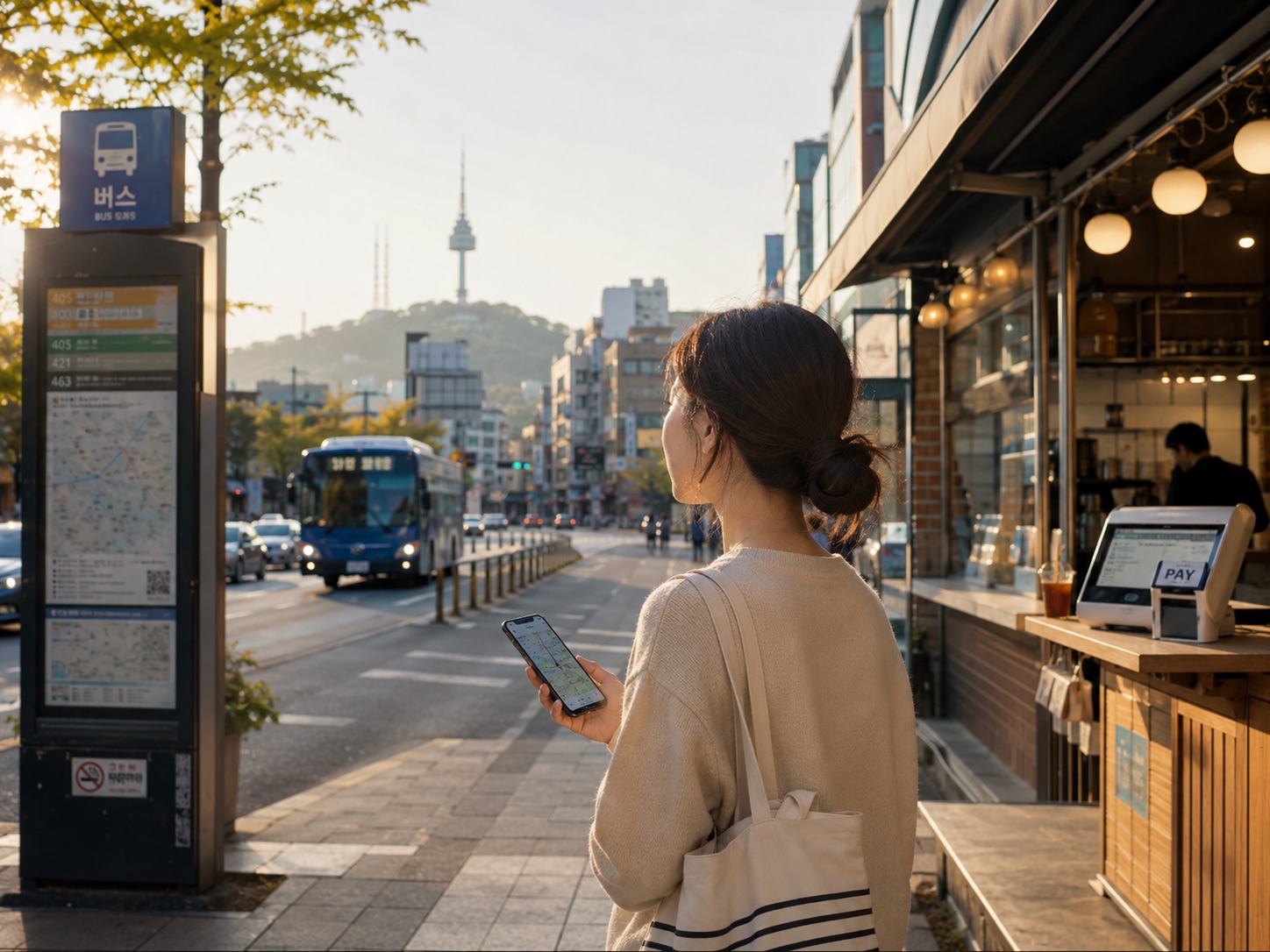
After two months in Seoul, one thing became very clear to me: daily life can feel much smoother when digital services actually work together.
I used my phone for almost everything.
Finding my way around the city. Checking bus arrivals. Paying in cafés. Ordering food. Booking things. Getting information quickly. Finding a doctor or a pharmacy.
Of course, Korea is not perfect. And as a foreigner, some things were actually more complicated than I expected.
The T-money card, for example, was still annoying because I had to top it up with cash. Some apps also require a Korean phone number, a Korean ID, or a local bank account.
So it's not as simple as saying: "Korea is digital, Belgium is behind."
But still.
When I came back to Brussels, I felt the difference.
Things that took a few seconds in Seoul suddenly felt like they needed three apps, two websites, a login that doesn't work, and maybe a phone call during office hours.
And honestly, that's where I think Belgium could learn something.
Not by copying Korea completely. But by making small daily-life services feel less painful.
Quick version
If I had to summarize it simply:
- Korea feels much smoother for daily digital services, especially for residents.
- As a visitor, it can be more mixed because some systems are not really made for foreigners.
- One reason it feels smoother, at least from my point of view, is that many services are connected through a few big ecosystems like Kakao or Naver.
- Belgium already has good tools, like Itsme, but they don't always feel connected to daily life.
- The biggest difference is not only technology. It's how services are organized.
- Belgium probably shouldn't copy Korea's full model, especially when it comes to privacy and platform dependency.
- But some things could definitely be improved: transport cards, real-time public transport, healthcare booking, and public service access.
The gap in daily life
What surprised me most in Korea was not one big futuristic thing.
It was all the small things.
In Seoul, I quickly got used to checking Naver Map instead of wondering if a bus was really coming. Bus arrivals felt much more reliable. The app told me where to go, which exit to take, and how long I had to wait.
In Brussels, I often feel like public transport information is more of a suggestion than a promise.
I also got used to how easy payments felt. In Korea, you can pay almost everywhere with your card or phone. In cafés, convenience stores, restaurants, taxis - it usually just works.
In Belgium, payments are already quite good, to be fair. But the experience still feels more fragmented. Some places prefer Bancontact, some cards don't work everywhere, some apps need extra confirmation, and everything feels a bit less smooth.
The same feeling applies to healthcare.
In Korea, I had the impression that finding information about clinics, pharmacies, opening hours, and reviews was much easier. You search, you compare, you go. It felt very practical.
In Belgium, it often still starts with: "Can I call them? Are they accepting new patients? Is there an online booking link? Is the information even up to date?"
It's not impossible.
It's just heavier.
Belgium has the tools, but they don't always connect
What frustrates me a bit is that Belgium is not starting from zero.
We have Itsme, which is actually very useful. We have Tax-on-web. We have banking apps that are quite good. We have public transport apps. We have online appointment platforms like Doctena. We have digital IDs and official portals.
So the problem is not that Belgium has no digital tools.
The problem is that they often feel separate.
You use one app for this, another website for that, another login somewhere else, then an email confirmation, then a PDF, then maybe a letter anyway.
It works, but it rarely feels smooth.
That's one of the biggest differences I felt with Korea. In Seoul, digital services often feel more integrated into daily life. In Belgium, digital services often feel like an extra layer added on top of old systems.
And for me, that makes a big difference.
Why Korea feels more connected
One reason why Korea feels smoother, at least from my perspective, is that many daily services seem to be connected through a few big ecosystems.
Kakao is a good example.
You don't only have KakaoTalk for messages. You also have KakaoPay, KakaoMap, KakaoTaxi, and many other services around it.
Naver also plays a huge role. Naver Map, Naver search, reviews, bookings, opening hours, directions - it becomes part of how you move through daily life.
As a user, I understand why this feels convenient.
You don't need to constantly move between completely different systems. You don't need to learn a new interface every time. Everything feels more connected, faster, and easier to use.
But I also think this is where Europe, and Belgium, would probably be more careful.
Having so many services linked to one ecosystem can make daily life easier, but it also raises questions around privacy, dependency, and competition.
So for me, Korea feels more convenient partly because the services are more centralized.
Belgium feels more fragmented, but maybe also more cautious.
I don't think one model is perfect.
I just think Belgium could learn from the convenience side, without copying the whole system.
What Korea does well
From my experience, Korea is very good at making daily services practical.
Not always perfect. Not always easy for foreigners. But practical.
For Koreans, many daily tasks can be done very quickly.
Public transport is easy to check. Payments are fast. Food delivery is extremely developed. Maps are precise. Customer service often happens through apps or messages. Many services are built around convenience.
And because many people use the same big platforms, the experience feels less scattered.
That has a downside, of course.
But as a user, I understand why it makes life easier.
What Belgium does differently
Belgium works differently for many reasons.
Some of them are valid.
We have more privacy protection. We have more regulation. We don't want one or two platforms to control everything. We have multiple governments and layers of administration. We have different languages, regions, systems, and responsibilities.
So I don't think Belgium should simply copy Korea.
I'm actually happy Europe protects privacy more. I don't necessarily want every daily-life service connected to one platform or one phone number. And I don't think it would be healthy if one app became essential for almost everything.
But sometimes, I also feel like Belgium uses complexity as an excuse.
Because privacy and convenience don't have to be complete opposites.
We could still make things easier.
What Belgium could realistically improve
I don't think Belgium needs a Korean-style super app.
But there are a few things that would already make daily life better.
Mobib in Apple Wallet and Google Wallet
This one feels obvious.
I don't understand why we still need a physical Mobib card in 2026. Being able to add it to Apple Wallet or Google Wallet would already make public transport feel easier, especially for people who don't use it every day.
Better real-time public transport information
I don't need the app to be beautiful.
I just want it to be accurate.
If a bus says 5 minutes, I want it to mean 5 minutes. Not 5 minutes for the next 12 minutes.
This is one of the small things I missed from Korea very quickly.
Itsme everywhere it actually matters
Itsme is already good. But I'd love to see it used more consistently across public services, healthcare, insurance, and administration.
Not in a complicated way. Just as a simple way to prove who you are and access what you need.
Easier healthcare booking
This is probably one of the biggest ones.
Finding a doctor in Belgium can still feel strangely manual. Some doctors are on Doctena, some are not. Some have online booking, some only take calls. Some information is outdated.
I don't think one private platform needs to own everything. But Belgium could definitely make healthcare booking easier and more centralized.
Less paper by default
This is maybe the most Belgian thing.
Even when something is "digital," there is often still a PDF, a form, a signature, a scan, or a letter involved.
Sometimes paper makes sense. But many times, it just feels like the old system is still there, just hidden behind a website.
What Korea gets wrong too
I don't want this article to sound like Korea is perfect and Belgium is terrible.
That's not what I think.
Korea's digital convenience also has real downsides.
If you don't have a Korean phone number, many services become harder. If you don't have a Korean bank account, you can't access everything. If you're older or less comfortable with technology, daily life can become more difficult.
And when too many things depend on the same platforms, it creates a different kind of risk.
That's why I don't think Belgium should copy Korea completely.
In Belgium, the slower system can be frustrating, but it also means there are still human alternatives. You can still call, go to a counter, ask for help, or do things in a less digital way.
That matters too.
So for me, the goal is not to make Belgium exactly like Korea.
The goal would be to keep the good parts of the Belgian system, while removing some of the unnecessary friction.
What I missed when I came back to Brussels
The first thing I missed was reliable public transport information.
In Seoul, I got used to knowing when the bus was coming. Not approximately. Actually.
The second thing was how easy it felt to move through the city with my phone. Maps, routes, payments, cafés, opening hours - everything felt more connected.
The third thing was the feeling that services were designed around daily life.
Not around administration. Not around departments. Not around old internal systems. Around what people actually need to do.
And that's probably the biggest lesson for me.
Digital services are not only about having an app.
They're about making life easier.
Practical thoughts for visitors to Korea
If you're visiting Korea, there are a few things I would definitely recommend:
- Download Naver Map before you go.
- Don't rely too much on Google Maps.
- Get a Korean SIM or eSIM if you can.
- Buy a T-money card at the airport or in a convenience store.
- Keep some cash to top it up.
- Don't expect all Korean apps to work perfectly as a tourist.
- Wise and Revolut cards worked fine for me in most places.
Korea feels very digital, but not always foreigner-friendly.
Once you understand that, it becomes easier to plan around it.
FAQ
Is South Korea really ahead of Belgium in digital services?
For daily life, I think Korea often feels smoother, especially for residents. Public transport, payments, maps, booking systems and delivery apps are very integrated. But as a visitor, it can be more mixed because many services require a Korean phone number, ID or bank account.
Could Belgium realistically copy Korea's digital services?
Not completely, and I don't think it should. Belgium has different privacy rules, different institutions, and a different culture around data. But Belgium could still improve very practical things, like Mobib in phone wallets, better real-time public transport information, easier healthcare booking, and more consistent use of Itsme.
Why do digital services feel so connected in Korea?
From my point of view, one reason is that many services are connected through a few big ecosystems like Kakao and Naver. As a user, this makes daily life feel easier and less fragmented. But it also creates questions around privacy, dependency and competition, so I don't think Belgium should copy it completely.
Closing thoughts
Korea's digital services are not magic.
They work because the country made certain choices. Some of those choices make life easier. Some of them also create problems, especially around privacy, platform dependency, and access for foreigners or older people.
Belgium doesn't need to become Korea.
But after two months in Seoul, I do think Belgium could make daily life feel much smoother.
Not with huge futuristic projects.
Just with small, practical improvements.
A Mobib card in your phone. Public transport times that are actually accurate. Doctors that are easier to book. Itsme used in the right places. Less paper when digital should be enough.
It sounds small.
But honestly, those are the things that make a normal day feel easier.